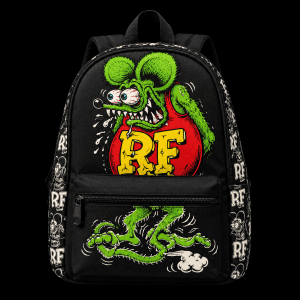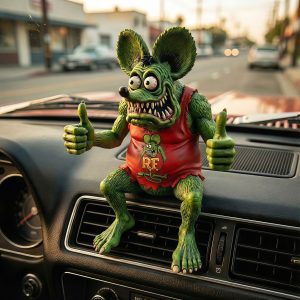
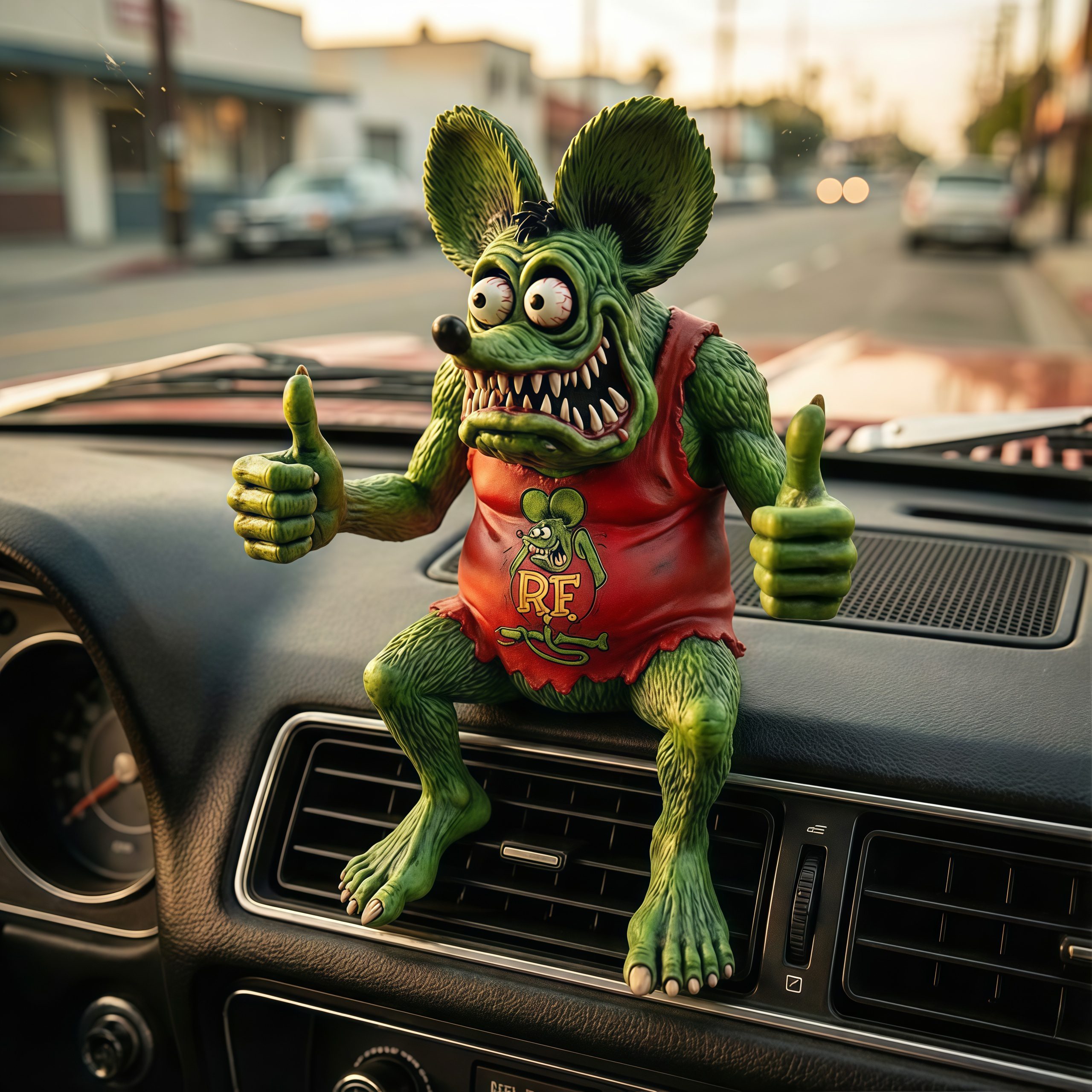
Rat Fink is green because Ed “Big Daddy” Roth painted him that way on purpose — a toxic, radioactive green meant to mock the polished candy-colored hot rods of the early 1960s. The lurid shade became the character’s signature, and it’s the color collectors still hunt for today.
The Short, Airbrushed History of Rat Fink’s Color
Ed Roth started drawing Rat Fink in the late 1950s as a joke. The hot rod scene he worked in was obsessed with perfection: mile-deep candy paint, flawless chrome, and gleaming bodywork. Roth found the whole thing a little too serious. So he invented a monster — a greasy, buck-toothed, bug-eyed mouse with a beer belly and a manic grin — and colored it a shade of green that looked like it had crawled out of a chemical spill.
The green wasn’t accidental. Roth was a master airbrush artist, and he knew exactly what a harsh, unnatural green would do against the clean pastels and metallic flake of a show car. It clashed. It looked slightly sick. And that was the entire point. Rat Fink was the anti-hero of a culture already rebelling against the mainstream, and his color was part of the rebellion.
What Shade of Green Is Rat Fink, Exactly?
Ask five collectors and you’ll get five answers. The original Roth illustrations ran a muddy, almost olive green with yellow highlights. Later merchandise pushed it brighter and more cartoonish — think classic slime green. Some versions skew minty, others lean toward lime. What matters isn’t the exact Pantone number; it’s that the green always reads as slightly toxic. That sickly quality is what separates a real Rat Fink green from a generic cartoon green.
The inconsistency actually helps collectors. A vintage shirt with a faded olive Fink, a modern figure in bright slime green, a hand-painted piece in mint — they all count, and they all tell the same story. The green is the through-line.
Why Green Stuck When Everything Else Changed
Rat Fink could have been any color, and over the years Roth drew plenty of variations. But green is the one that became shorthand for the character. There are a few reasons:
- It’s instantly recognizable. A flash of toxic green on a shelf reads as Rat Fink from across the room.
- It ties into the monster theme. Frankenstein green, swamp-creature green, toxic-waste green — the color reinforces the monster joke.
- It photographs well. Roth’s airbrush work popped in magazines and on t-shirt transfers, and green gave the character a signature that reproduced clearly in cheap print.
That last point mattered more than people think. Rat Fink blew up through iron-on transfers and model kits — mass-market media that needed a bold, simple color identity. Green delivered it.
Green Collectibles That Belong on Your Shelf
If the green is what draws you to Rat Fink, you’re in good company. The best modern collectibles lean into it hard. The A Funny Green Mouse decorative figurine is exactly what it sounds like — a shelf-ready take on the character in his signature shade, no paint job required. It’s the kind of piece that anchors a display and gives the whole shelf its theme.
For something you can actually use, the A Funny Green Mouse limited edition pen keeps the green on your desk instead of your wall. It’s a small, affordable way to carry a little counterculture with you, and a natural gift for anyone who works in a garage or an office that needs loosening up.
So, Is Green the Only Real Rat Fink?
No — and a good collection shouldn’t be a purity test. Roth experimented constantly, and modern makers do too. But green is the color the character is famous for, and it’s the one most collectors start with. If you’re building your first display, lead with the green. It’s the color that started it all, and it still does the heavy lifting today.
Want the signature green on your shelf? Grab the green mouse figurine or the limited edition pen and let the color do the talking.