Most Rat Fink collectibles are worth far less than the hype suggests, and a handful are worth far more. An original, sealed 1960s Revell model kit in the right condition can list in the low three figures, a well-worn reissue or a modern tribute piece might cost $20 to $50, and original Ed Roth artwork sits in an entirely different, much pricier tier. The short version: condition, originality, and age set the price, and most of the money sits at the rare, boxed, and untouched end of the market. This guide breaks down what actually drives Rat Fink value in 2026 and where new tribute pieces like the ones in our store fit into the picture.
What “Original Rat Fink Collectibles” Actually Means
Before talking numbers, it helps to define the term, because “Rat Fink collectible” covers three very different markets. The first is the genuinely old material: 1960s model kits, t-shirts, decals, stickers, and toys produced when Rat Fink was at the height of its popularity between roughly 1963 and 1965. The second is the endless stream of licensed reissues and modern merchandise, from the Hot Wheels tribute cars to the t-shirts and posters still sold today. The third is original artwork and ephemera straight from Ed “Big Daddy” Roth’s studio, which is a collector’s category of its own. Each tier prices differently, and confusing them is how buyers overpay.
The Factors That Set Rat Fink Value
Across all three tiers, the same five factors move the price. Understanding them is more useful than memorizing any single price, because the same item can list for $15 or $300 depending on where it falls on each one.
Age and Originality
An item from the original 1960s production run is worth more than the same design reissued in the 1990s or 2000s, simply because fewer originals survive. Revell began producing plastic model kits of Roth’s custom cars in 1962 and released the Rat Fink kit in 1963, which makes those early kits the reference point for “original” in this market. A reissue can look nearly identical on the shelf but trades at a fraction of an original’s price.
Condition
Condition is the single biggest swing factor. For model kits, the hierarchy runs from sealed and mint down through opened-but-complete to built, played-with, and missing parts. A sealed original box with the plastic still on the shrink wrap sits at the top; a built model with glue marks and a missing decal sits near the bottom. The same logic applies to paper goods: a sticker or decal sheet that has never been applied is worth more than one that spent fifty years yellowing on a tool chest.
Rarity of the Specific Item
Not every Rat Fink item from 1963 is rare. The character was licensed widely, so common t-shirts and stickers survive in quantity and trade modestly. The rarer material, specific early kit variants, one-off Roth art, and short-run promotional items, commands the higher prices. Rarity is why two items from the same year can be worth ten times apart.
Provenance and Authentication
For original artwork and studio ephemera, provenance is everything. A piece documented as coming from Roth’s Maywood, California shop, with a paper trail or a known collector’s chain of custody, is worth far more than an unsigned drawing someone found in a drawer. This is also where fakes and optimistic attributions live, so the paperwork often matters as much as the object.
Completeness
For anything with parts, completeness is a quiet multiplier. A model kit with all its sprues intact, its decals unapplied, and its instructions present is complete; one missing a wheel or an instruction sheet is not. Collectors pay a real premium for completeness, because finishing a fifty-year-old kit from loose parts is expensive and time-consuming.
A Realistic Value Range for Common Rat Fink Items
The numbers below are market guidance, not appraisals, and they move with condition and the specific item. They reflect what items commonly list for on resale marketplaces as of 2026, with the understanding that the high end of each range requires near-mint, original, and complete examples.
1960s Revell Model Kits
The original Rat Fink and Roth car kits from 1962 through the mid-1960s are the center of the market. Built and played-with examples commonly list from about $20 to $60. Opened but complete and unbuilt kits can reach roughly $80 to $150. Sealed, mint, original boxes sit at the top, commonly listing from the low $100s up to $300 or more for the most sought-after kits, with rare early variants occasionally higher. The spread between a built kit and a sealed one is the clearest example of condition driving a fivefold or greater difference in price.
1960s T-Shirts, Decals, and Stickers
Original t-shirts, decals, and sticker sheets from the 1963 to 1965 peak are the most common surviving Rat Fink items. Worn shirts and loose stickers commonly trade in the $30 to $80 range, while an unused decal sheet or a shirt in genuinely wearable vintage condition can list from $80 to $150 or more. Paper goods hold value best when they are flat, unapplied, and stored out of the sun.
Original Roth Artwork and Studio Ephemera
Original artwork and Roth Studio ephemera is a different league, and it is also the least predictable tier because supply is thin and authentication is hard. Signed or documented pieces can list from the high three figures into the low four figures and beyond for a recognized example, but this tier is essentially a collector-to-collector market where each piece is priced on its own. Casual buyers should treat unprovenanced “original Roth” claims with real skepticism.
Where Modern Tribute Collectibles Fit In
Not everyone wants to hunt auctions and estate sales, and most fans are better served by new, affordable tribute pieces that capture the Rat Fink look without the vintage price and the authentication headache. These sit in the $30 to $40 range and are built to be displayed or used, not graded. The value here is in the design and the daily enjoyment rather than investment, which is honestly the right frame for most people. A few examples from our own catalog show how the aesthetic carries across formats.
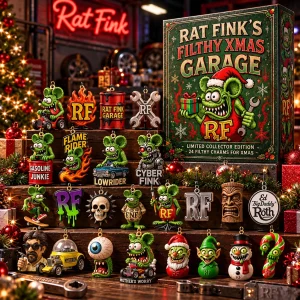
The A Funny Green Mouse Decorative Figurine is a 15 cm display piece in the classic thumbs-up pose, sized for a dashboard, desk, bookshelf, or garage shelf, and offered in two styles. The Kustom Legend Commemorative Wall Bell is a handmade metal bell with flame graphics and skull-engine relief that works as both a functional bell and wall art. For the holiday season, the 2026 Rat Fink Advent Calendar packs 24 surprise mini figures, one behind each door, in collector-style packaging, in a calendar roughly 11 inches wide by 7 inches tall. These are the pieces most fans actually buy, because they deliver the look for the price of a couple of six-packs rather than a car payment.
How to Avoid Overpaying for Rat Fink Collectibles
Overpaying usually happens for one of three reasons: buying a reissue thinking it is original, buying on condition without inspecting photos, or trusting an unprovenanced “original” claim. A few habits keep you safe.
Check for reissue markers
Reissued model kits and modern merchandise often carry later copyright dates, modern packaging, or “tribute” language that original 1960s items lack. Comparing the packaging against known original examples, or simply asking for the year and a photo of the copyright line, filters out most reissue-as-original confusion. If you want the look without paying for originals, a modern tribute piece is the honest, budget-friendly way to go.
Buy condition, not just the item
A sealed original and a built original are the same object in name only. Before paying a collector price, confirm whether a kit is sealed, opened-but-complete, or built, and whether a shirt or sticker is unused or worn. Photos of the actual item, not a stock photo, are non-negotiable on the pricier end.
Insist on provenance for “original art”
For anything sold as original Ed Roth artwork, a name and a price are not enough. Ask for documentation, a chain of custody, or an established dealer’s or auction house’s attribution. If the seller cannot produce any of it, walk away, because this is the tier where fakes and optimistic misattributions are most common.
How to Start a Rat Fink Collection on a Budget
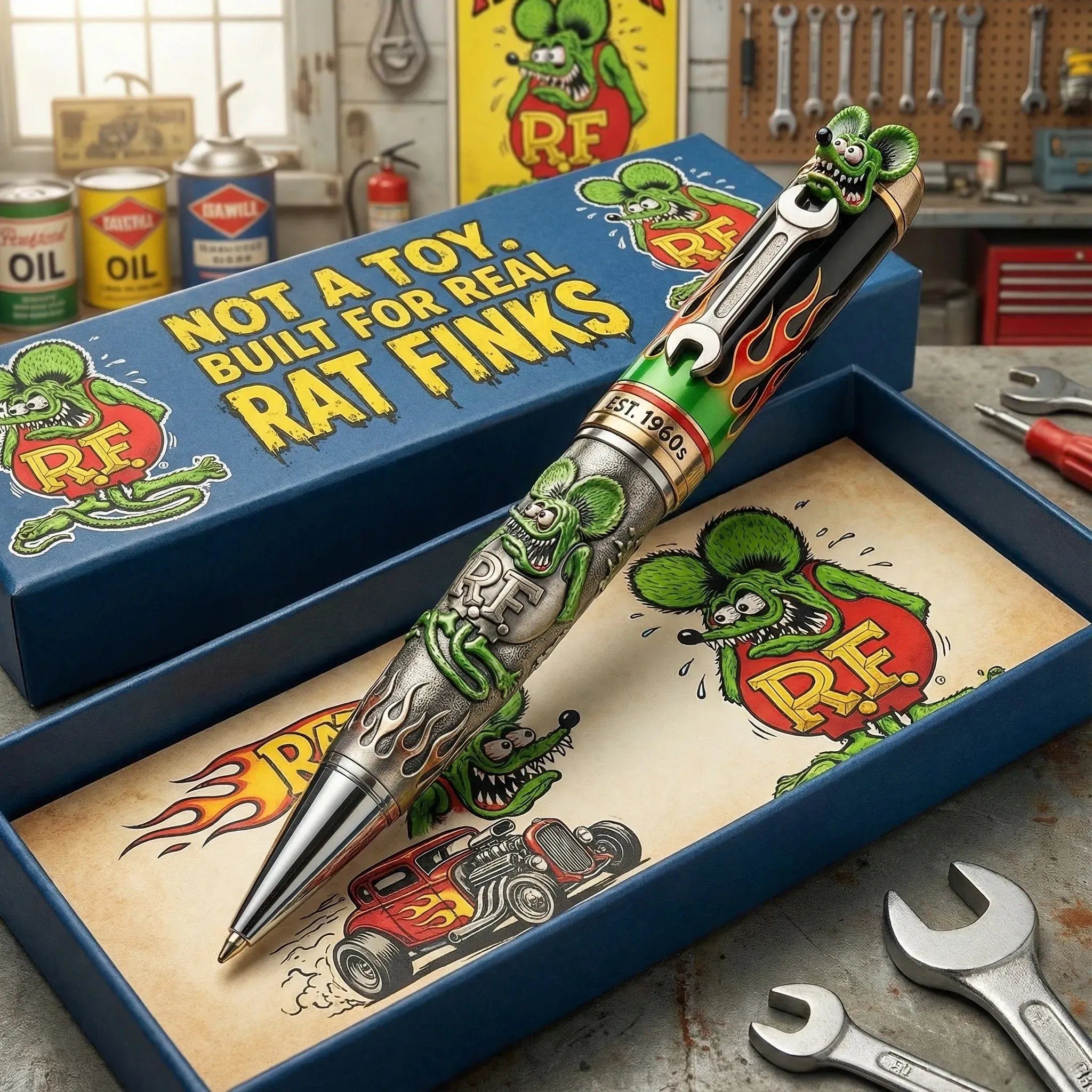
You do not need sealed originals to build a collection that looks good on a shelf. A sensible starter budget of $60 to $80 buys two or three new tribute pieces with real display presence. The A Funny Green Mouse Decorative Figurine at 15 cm is the classic entry point for a desk or dashboard, the Kustom Legend Commemorative Wall Bell fills a garage wall for about the price of a dinner out, and smaller accent pieces such as the Rat Fink Kustom Kulture Flip Top Oil Lighter or the A Funny Green Mouse Limited Edition Pen round out the shelf. Start with one hero piece you will actually look at every day, then add one item per month rather than buying a pile at once, which keeps both the budget and the display from getting cluttered. For gift buyers, the 2026 Rat Fink Advent Calendar is a one-shot way to hand someone 24 mini figures and start a collection for them overnight.
Common Questions About Rat Fink Collectible Value
Are Rat Fink items a good investment?
For most buyers, no, and it is worth saying that plainly. The rare, sealed, original material can hold or gain value, but the common material and everything modern trades more like a fun purchase than an asset. Buy because you like the green mouse, not because you expect a return, and treat any appreciation as a bonus rather than a plan.
How can I tell an original 1960s kit from a reissue?
Look at the copyright line, the packaging style, and the box construction. Original Revell kits from the 1960s have period packaging and dated copyrights, while reissues carry later dates and often modernized printing. A side-by-side with documented original packaging is the most reliable check.
What is the most valuable Rat Fink collectible?
Original Ed Roth artwork and studio ephemera sits at the top of the market, ahead of even sealed 1960s model kits, because the supply is tiny and the demand comes from serious collectors. Among the more accessible items, sealed original model kits are the ceiling.
Do modern tribute pieces hold any value?
Modern tribute pieces are not investments, but limited-release and display-focused items such as the A Funny Green Mouse Limited Edition Pen and the Rat Fink Kustom Kulture Flip Top Oil Lighter can hold steady on the secondary market because their runs are small and they are bought to keep. The value is mostly in owning and displaying them, which is the point for most fans.
Is it better to buy sealed originals or new tribute pieces?
It depends on the goal. Sealed originals are for buyers who want vintage scarcity and are willing to pay three figures and to authenticate what they buy. New tribute pieces are for buyers who want the Rat Fink look on a shelf or in daily use for $30 to $40 without the risk. Most collectors end up with a mix: a few affordable modern pieces for display, and, if the budget allows, one or two originals bought slowly and carefully.
Where should I buy Rat Fink collectibles?
For original vintage material, auction houses, estate sales, and reputable collector marketplaces with buyer protection are the safest routes. For new tribute pieces, buy from a shop that shows clear photos, real specs such as dimensions and materials, and an actual price, rather than a mystery listing with no detail.
The Bottom Line
The honest answer to “how much are Rat Fink collectibles worth” is that it depends on condition, originality, and rarity, with sealed 1960s model kits and original Roth artwork at the top and common reissues and modern tribute pieces at the affordable bottom. Most fans are happiest buying the pieces they actually want to display and use, which is exactly where modern tribute collectibles earn their keep. If you want to start or grow a Rat Fink display without gambling on vintage authenticity, start with the A Funny Green Mouse Decorative Figurine, add the Kustom Legend Commemorative Wall Bell for the garage wall, and let the rest of the collection build from there.